
|
||||||||
|
|
|
Metric system |

he International System of Units — SI — each physical quantity — length, mass, volume, etc. — is represented by a specific SI unit. Larger and smaller multiples of that unit are made by adding SI prefixes. Commonly used metric system units and symbols
The most commonly used metric prefixesThis table shows the most commonly used SI prefixes. For a complete list of SI prefixes, including their origins, see SI prefixes and their etymologies.
A note about usageAlthough unit names are ordinary words, note that unit symbols
Some examples and relationships among units 
1 liter of water weighs 1 kilogram, so 1 cubic meter — 1000 liters — of water weighs 1000 kilograms or 1 metric ton. 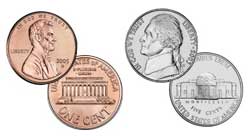
A US cent weighs exactly 2.5 g, while the nickel weighs exactly 5 g. 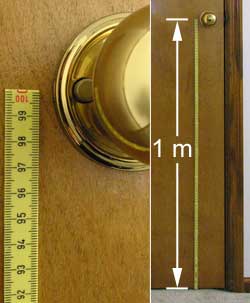
A doorknob is typically about 1 m high. 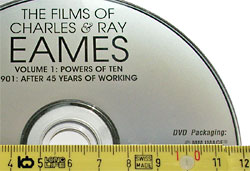
The diameter of a CD or DVD is 12 cm. 1 mL = 1 cm3 1 milliliter is the same volume as 1 cubic centimeter. 1 mL of water has a mass of approximately 1 g The mass of 1 milliliter of water is approximately 1 gram. 1 L of water has a mass of approximately 1 kg The mass of 1 liter of water is therefore approximately 1 kilogram. 1 m3 of water has a mass of approximately 1 t There are 1000 liters in a cubic meter, so the mass of 1 cubic meter of water is approximately 1000 kilograms or 1 metric ton. The mass of a nickel is 5 g A US nickel weighs 5 grams, and a penny weighs 2.5 grams. A typical doorknob is 1 m high Although there's no precise standard for doorknob heights, they're often about 1 meter above the floor. The diameter of a CD or DVD is 12 cm A CD or DVD is 12 centimeters (120 millimeters) across. The diameter of the center hole is 15 millimeters. 1 ha is 1002 m2 1 hectare is 10 000 square meters, equivalent to the area of a square 100 meters on a side. A football field is about 100 meters long, so imagine a square the length of a football field on each side, and that's 1 hectare. Approximate conversion factors from inch-pound to metric unitsThis table gives easily remembered, approximate conversion factors for some common units, as well as more precise factors. Boldfaced values are exact. But remember, estimated values don't warrant precise conversions. If “it was about 100 yards away,” then it was about 100 meters away. Only if it was exactly 100 yards away would one convert the measurement to 91.44 meters.
Note 1. Ounces and pounds refer to avordupois units. Note 2. Fluid ounces, quarts, and gallons refer to US liquid measures. |
|||||||||||||||||||||||||||||||||||||||||||||||||||||||||||||||||||||||||||||||||||||||||||||||||||||||||||||||||||||||||||||||||||||||||||||||||||||||||||||||||||||||||||||||||||||||||||||||||||||||||||||||||||||||||||||||||||||||||||||||||||||||||||||||||||||||||||||||||||||||||||||||||||||||||
|
Transit to Russia Cargo Stuffing Bulk Cargo |
Freight forwarding Auto transportation Our advantages |
Phone: +380-48-7091189 (5 lines) Fax : +380-67-2361045 E-mail: eurans.ods@gmail.com |


